
Worship Guide for June 14, 2026
Like TV Guide, but from God! Find the text of the Prayers of the People and Sermon below. Use the buttons provided to find other worship materials.
To see the Worship Guide for other weeks, click here.
To see the Book of Common Prayer online, click here.


The Possible Impossible
The Reverend Linda Mackie Griggs
Pentecost 3 Proper 6 Year A
Genesis 18: 1-15, 21:1-7
Matthew 9:35-10:8-23
Sermon Audio:
Sermon Text:
The Possible Impossible
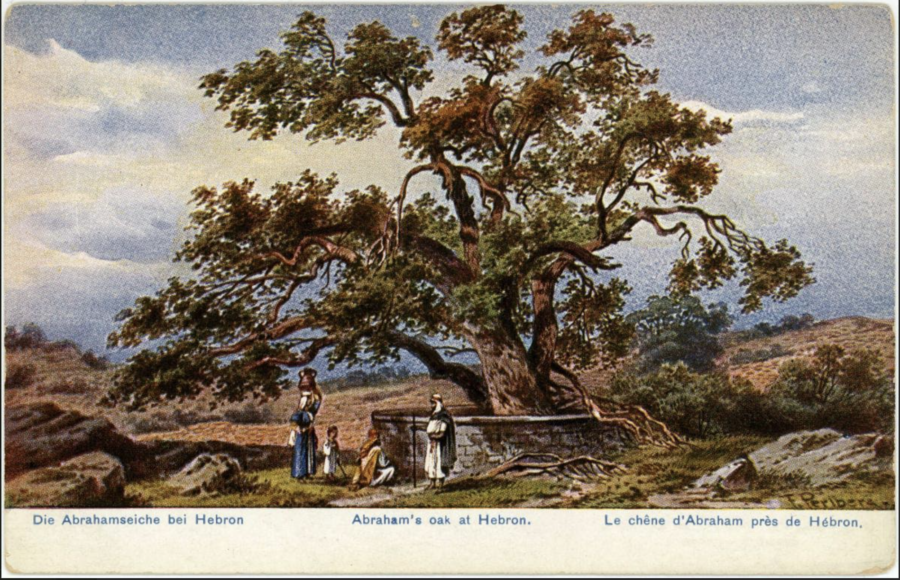
“The Lord appeared to Abraham by the oaks of Mamre, as he sat at the entrance of his tent in the heat of the day.”
This is a charming story, isn’t it?
One Sunday years ago at St. Peter’s, Charlotte, a layreader approached the lectern carrying his infant daughter, a little redheaded cutie that the whole congregation adored. As her father read the story of Abraham and the strangers, she started to squirm a bit…then she put her hand in the middle of his face…and finally tried to grab the reading from his hands, making it difficult for him to retain his dignity. But we loved it. By the time he got to the end we were all giggling right along with Sarah.
The story of Abraham, Sarah and the announcement of an impossible pregnancy is an old favorite. We love the image of Abraham rushing around to provide hospitality, running here and hastening there. We love seeing Sarah eavesdropping on the men’s conversation, betrayed by her guffaw of amazement at the strangers’ news. We even enjoy the banter at the end; “I did not laugh!” … ”Oh yes, you did…”
It’s such a charming story. Or is it?
There is much going on here.
It all began with a word from God to Abram back in the twelfth chapter of Genesis:
“Go,” said God, to a land that I will show you. I will make of you a great nation.
And Abram went; with his wife Sarai and all their belongings. He was 75 years old.
Three chapters, a number of years, and a series of adventures and misadventures later, Abram is getting impatient. If he is to be the father of a great nation, time is of the essence since Abram and Sarai aren’t getting any younger. God reassures Abram, taking him outside to try to count the stars, saying, “So shall your descendants be.”
And Abram believes him.
More years pass, and now Sarai gets impatient. She takes matters into her own hands and persuades Abram to father a child with his slave Hagar, who gives birth to Ishmael. (Drama ensues, you’ll need to read about it for yourself.)
More years pass. Abram is now 99 and Sarai remains barren. God approaches Abram again, and again promises that he will be the father of multitudes. God gives Abram and Sarai new names, Abraham and Sarah, and tells Abraham that Sarah will have a son, named Isaac.
And what does Abraham do?
“Abraham fell on his face and laughed and said to himself, “Can a child be born to a man who is a hundred years old? Can Sarah, who is ninety years old, bear a child?”
He laughed.
Which brings us to today’s story. God’s Promise, made twenty five years previously, has been repeatedly imperiled, most recently by Abraham’s and Sarah’s actions as they tried to take control of the narrative themselves; Hagar, not Sarah, is the mother of Abraham’s only son. So the sudden appearance of strangers once again reminding Abraham and Sarah of God’s quarter century year-old promise was likely to be greeted with skepticism.
“So Sarah laughed to herself…”
I often quote Anne Lamott’s saying that laughter is carbonated holiness. But now that we understand the context, Sarah’s laughter takes on a different tone. Though three chapters later she will try to reframe this episode (in the verses in your bulletin that were not read today,) it’s obvious that Sarah didn’t believe the news the strangers brought.
What does this story tell us, then? That Sarah and Abraham, long held up to us as models of faith, are actually portrayed here, according to Walter Brueggemann, as models of disbelief. He writes:
“For them, the powerful promise of God outdistances their ability to receive it…Abraham and Sarah have by this time become accustomed to their barrenness. They are resigned to their closed future. … The promise does not meet them in receptive hopefulness but in resistant hopelessness.”
“Resigned to their closed future.”
Sarah’s laughter, then, is bitter.
And the stranger’s response to her reaction is a question that resounds through Scripture and in our own lives:
“Is anything too wonderful for the Lord?” It is not a rhetorical question.
And Abraham and Sarah leave it unanswered. And we are left to wonder. It asks us to interrogate our relationship to God in a way that refuses to let us off the hook. That’s as it should be, and therein lies the power and the challenge of this deceptively charming story.
Is nothing impossible for God?
How we answer this question is fundamental to our faith journey. Is God, God, or not? Is God free to work the impossible, or not?
Is God limited by our expectations?
This is the tension we are left with as the strangers take their leave of Sarah and Abraham. Brueggemann observes that in their lack of response to this fundamental question, in their silence, they are free to think that their life as they know it–with its low expectations, their closed, barren, giving-up hopelessness—is still intact. They don’t need to be challenged by hope. As long as they remain silent.
This is an eternal question; that of trust. Is our future closed, as it seemed to Sarah and Abraham after twenty five years, to the radical possible impossibility of God?
One of the ways this question trips us up is in letting it slip into platitude. This happens when we misunderstand what God’s promise entails, and what it does not.
God does not promise that we can get everything we want. That way lies platitude, disappointment, resentment, and alienation. Instead, Bruggemann writes:
“…not everything is promised. What is ‘possible’ is characterized only as everything promised by God. That is [,] only what corresponds to God’s good purposes is possible. [God] has promised a future in a new community, but not everything we would seek.”
Even Jesus comes up against the hard truth that God’s promise is not a magic lamp. He must drink the cup of suffering. As must we all.
Is nothing impossible with God? As we encounter the pain and brokenness of the world, we come face-to-face with our doubts, just as Sarah and Abraham did. We are tempted to be resigned to a closed future—to resistant hopelessness instead of receptive hopefulness.
Yet. Jesus answers the strangers’ question in the 19th chapter of Matthew’s Gospel:
“…for God all things are possible.”
How do we resolve this? Maybe we don’t. Maybe we wrestle.
What makes us laugh like Sarah and Abraham? Loving your enemies. Turning the other cheek. Redifining who is our neighbor. Welcoming the stranger. Feeding the hungry, housing the homeless. Mercy for all. Justice for all. Beloved Community.
We laugh like Sarah. It’s impossible. Right?
Jesus sent his disciples out like sheep among wolves to heal, cast out demons, and to proclaim the Good News of the Dream of God. He didn’t say it wouldn’t be hard. He didn’t say they wouldn’t suffer. But he did say that the Spirit would be present. And later, in his last words to them before his Ascension, he promised to be with us always, even to the end of the age.
God’s promise is presence. Even when, as sometimes happens, all we hear is silence.
Brueggemann again:
“Faith is a scandal. The promise is beyond our expectation and beyond all evidence. The “impossibility possibility” of God deals frighteningly with our future. No wonder Sarah was frightened….The promise is given. But the community is called to a long wait.”
I said last week that our project in Ordinary Time in these anti-ordinary times is not a liturgical vacation, but more like boot camp. So, our boot camp assignment this week is to wrestle with what it means to open our hearts to the possible impossible of God. This is not a guilt trip from the pulpit. I wrestle right along with you. Rather it is a naming of the reality of the bumpiness of our faith journey, individually and as a community. In that naming we have begun by being honest with ourselves and with God.
The hope is in the wrestling.
Prayers of the People, 3 Pentecost, 14 June 2026
The response to the bidding, “Lord, in your mercy,” is “hear our prayer.”
Loving God, bless your Church: Be our vision that we might follow where you lead, and guard us when we stumble that we might always persevere in continuing Jesus’ ministry of love and compassion.
Lord, in your mercy, hear our prayer.
We pray for the world in its brokenness, remembering those places where war, violence, injustice and disease are causing great suffering, especially in those places we name [pause]. We pray for the wisdom and will to bring peace, healing, and reconciliation to our broken world.
Lord, in your mercy, hear our prayer.
God of Justice, embolden us to hold all of our leaders accountable to the values of interdependence, and unity in diversity; grant them wisdom and courage to work for the good of all people, not just the privileged few.
Lord, in your mercy, hear our prayer.
We pray for ourselves, and the needs of our community; for the recognition of the dignity of all of our neighbors, for the awareness of, and effective action against poverty and injustice, locally, nationally, and globally.
Lord, in your mercy, hear our prayer.
God abundance, we pray for your Creation, that we might be good stewards of your bounty, living in harmony with Mother Earth and reciprocating her generosity by protecting and preserving what She freely gives us.
Lord, in your mercy, hear our prayer.
We pray for healing for all who suffer in body, mind, or spirit, that they may know wholeness and peace, remembering especially Linda, Sam, David, and those we name [pause]. Lord, in your mercy, hear our prayer.
Let your wisdom and grace rest upon those who celebrate birthdays this week, especially Michael Robey.
We pray for those we love but see no longer, remembering especially those we name [pause]. And we pray for all who grieve.
Lord, in your mercy, hear our prayer.
Celebrant adds a concluding prayer.