
Worship Guide for June 28, 2026
Like TV Guide, but from God! Find the text of the Prayers of the People and Sermon below. Use the buttons provided to find other worship materials.
To see the Worship Guide for other weeks, click here.
To see the Book of Common Prayer online, click here.


“After These Things…”
The Reverend Linda Mackie Griggs
Proper 8 Year A, Pentecost 5
28 June 2026
Genesis 22:1-14
Psalm 13
Romans 6:12-23
Matthew 10:40-42
Audio Recording of the Sermon:
Text of the Sermon:
“After These Things…”
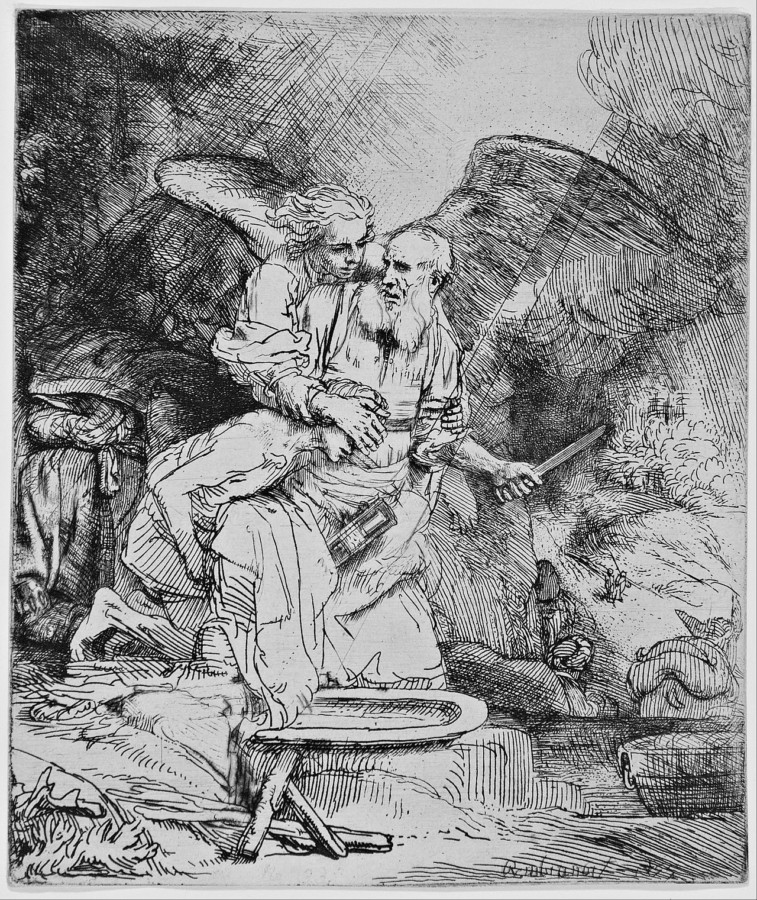
“Take your son, your only son Isaac, whom you love, and go to the land of Moriah and offer him there as a burnt offering on one of the mountains that I shall show you.”
The Binding of Isaac. In Hebrew, Akedah. This is one of the most alienating stories in the Bible. In recent weeks I have referred to this season of Ordinary Time as a kind of boot camp in which we can engage more deeply with Scripture and explore how it can apply to our ordinary lives. Well if we’re in boot camp, then today is our fifty-mile hike with full pack and only one canteen of water.
So let’s begin. Because the only way out is through.
And let’s begin with what is missing from what the Lectionary has given us. Three words, without which we are lost before we start:
“After these things.”
“After these things God tested Abraham.”
What things?
Well, that’s the point.
Hebrew Bible scholar Ellen Davis tells us that we cannot soften the blow of this story or explain it away, though many have tried. We are faced with the stark truth that this is what it appears to be; an appalling story of a testing God and a compliant father. So the only question is, what is it telling us about these two and their relationship? And what does it tell us about the nature of God?
“After these things.”
For the past several chapters in Genesis, Abraham and Sarah have been through a lot, beginning with God’s command to them to leave everything behind and go to where God would show them. God makes a covenant with Abraham that God would make of him a great nation and that all people of the earth would be blessed through him. Twenty-five years of fits and starts later, Sarah gives birth to her only (and Abraham’s second) son.
So, “after these things”, God tested Abraham.
Yes, and.
From God’s perspective we have a longer arc, beginning with God’s Word spoken into chaos and the creation of human beings.
And it began to go wrong from the start, with the disobedience in the Garden, Cain’s murder of Abel, which initiated an escalation of violence that prompted God to wipe the slate clean with a great Flood. So, as Davis writes:
“The first eleven chapters of Genesis…is predominantly a story of steady alienation from God, human rejection of God…At this point, God gives up on trying to work a blessing directly upon all humankind.”
God instead focuses on one family. One people. One man. God makes a covenant to be faithful to that one person, Abram…
…if Abram/Abraham will simply love and trust God in return. If Abraham will be faithful.
In God’s yearning for loving, trusting relationship and divine blessing on the world, God has gone all in. In spite of having been burned repeatedly since the Garden.
God has chosen a very, very, vulnerable position.
God. Has. Chosen.
We are told that we were created in the image of God. One of the ways in which we reflect God’s image is something we don’t always consider.
We choose.
God’s first, and most risky, gift to God’s children was the ability to choose. Free will.
God chooses. And in God’s image, so do we.
Hold that thought.
Davis points out that we more often picture God as omni–; omniscient, omnipotent—and it is perhaps easier to conceive of God that way, as able to see, to do, to know, everything. But the storyteller here is offering a more daring and—amazingly, lifegiving—theology; that of a God who is vulnerable. And it is in that vulnerability, combined with God’s yearning for covenant relationship, that our story is rooted:
The Binding of Isaac shows us a God who is vulnerable, terribly and terrifyingly so, in the context of covenant relationship…. For…the covenant with God is fundamentally an unbreakable bond of love… And ordinary experience teaches that love and vulnerability are inextricably linked; we are most vulnerable to emotional pain when the well-being and the faithfulness of those we love are at stake. … So it follows that God’s vulnerability in love is an essential element of covenant relationship.
God loves Creation into being. God tries again and again to persuade God’s children to trust and be faithful, getting burned again and again. God chooses Abram. Abram enters into covenant with God. And plays fast and loose with it, again and again, refusing to trust God’s promise and repeatedly trying to take control of the narrative. So, as Ellen Davis says, God’s desire for faithful relationship hangs by a very, very, thin thread.
After all of these things, God tested Abraham.
“Isaac said to his father Abraham, “Father!” And he said, “Here I am, my son.” He said, “The fire and the wood are here, but where is the lamb for a burnt offering?” 8 Abraham said, “God himself will provide the lamb for a burnt offering, my son.”
The conversation between father and son is so…weighted. As Abraham tells Isaac that God will provide the lamb, we realize two competing things: That Abraham is expressing his complete faith in God–who promised him this child and the blessing of generations through him. And at the same time, because this is what faith is—a belief in what we do not know—Abraham does not know what God will do.
And because of “after these things”, God also does not know what Abraham will do next; whether that thinnest of threads will hold.
They don’t know.
This is the cost of free will. And the vulnerability of covenant relationship. As Davis writes, this is the only way to “make heart-sense of this appalling test.”
The angel stops Abraham’s hand as it is poised to strike. Davis says,
“God’s relief erupts from the page. It is huge, global: ‘And all the nations of the earth shall find blessing through your seed, because you heeded my voice.’”
God’s relief is palpable. But Abraham? In his mind he has already killed his son.
So what now? We can notice a few things that can help us to move forward and perhaps make meaning from this narrative so aptly named “appalling.”
What do we notice?
That Abraham doesn’t speak to God again.
That Isaac doesn’t speak to Abraham again.
That Sarah doesn’t speak to anyone again.
Silence. The cost of this test, after these things.
Davis acknowledges that “this may be the most difficult story in the whole Bible.” One reason may be because it makes us face what we are capable of as a species. How many Isaacs are there for whom the knife was not stilled, by those who were deluded into thinking that they were doing right; who would see in this story a God who is not vulnerable but cruel? How many Isaacs, in Israel/Palestine, Iran, Ukraine, Sudan, Haiti, Cuba, the United States?
And this is the crux of what makes this story so painful and frightening—not just what we fear that it says about God, but what we know that it says about us.
A cruel God wouldn’t care about all those Isaacs. But a vulnerable God weeps, knowing the cost of God’s choice to free us.
What do we do with this?
Like God, we choose, too.
When faced with trauma—because that is emphatically what this story describes– we always have a choice; to be formed or de-formed by our experience; to succumb to bitter silence, or to summon resilience, from within or without. And when faced by the trauma experienced by our neighbor, we have another choice; to turn away, or to witness to their pain and to be part of their healing, as God calls us to do.
Most important, we can choose to hold God to God’s Covenant promise of blessing; a promise of faithfulness, compassion, reconciliation and presence. Because the God of testing and vulnerability is also the God of mercy and healing.
Both/and.
This is why the story of the Binding of Isaac is one of the lessons for Good Friday. Where we see someone willing to give up everything–everything—putting his total trust in the power of life over death.
And forgiving us for all of the Isaacs we didn’t save.
Prayers of the People, 5 Pentecost, 28 June 2026
The response to the bidding, “Lord, in your mercy,” is “hear our prayer.”
Loving God, guide your Church: Open our eyes to see your justice unfolding in our midst; grant us wisdom and courage to be agents of your love and compassion. Lord, in your mercy, hear our prayer.
We pray for the world in its brokenness, remembering those places where war, violence, injustice and natural disaster are causing great suffering, especially in those places we name [pause]. We pray for the wisdom and will to bring peace, healing, and reconciliation to our broken world.
Lord, in your mercy, hear our prayer.
God of Justice and Mercy, we pray for our nation, for the renewal of its promise, and for those elected to lead, that they will serve the common good and respect the dignity of every human being. We pray for all who work to heal our wounds and reconcile our divisions.
Lord, in your mercy, hear our prayer.
God of abundance, we pray for your Creation, that we might be good stewards of your bounty, living in harmony with Mother Earth and reciprocating her generosity by protecting, preserving, and restoring what She has freely given us. Lord, in your mercy, hear our prayer.
We pray for our parish family: Be present Holy One, and bring your healing power to all who suffer in body, mind, or spirit, remembering especially, Sam, David, Linda, Mike, Doug, and those we name. [pause] Lord, in your mercy, hear our prayer.
Let your wisdom and grace rest upon those who celebrate birthdays this week, especially Peter Fuller, Lauren Vitale, and Rick Worrell.
We give thanks for the marriage of Gavin Fuller, son of Amy and Peter Fuller, to Jessica Zhao on June 20th. Lord, in your mercy, hear our prayer.
We pray for those we love but see no longer, especially those we name [pause]. And we pray for all who grieve. Lord, in your mercy, hear our prayer.
Celebrant adds a concluding prayer.