
Worship Guide for October 25, 2026
Like TV Guide, but from God! Find the text of the Prayers of the People and Sermon below. Use the buttons provided to find other worship materials.
To see the Worship Guide for other weeks, click here.
To see the Book of Common Prayer online, click here.


Hear, O Israel
The Reverend Linda Mackie Griggs
22nd Sunday After Pentecost Proper 25 Year A
Deuteronomy 34:1-12
Psalm 90:1-6, 13-17
1 Thessalonians 2:1-8
Matthew 22:34-46
Sermon Recording:
Sermon for October 18, 2026
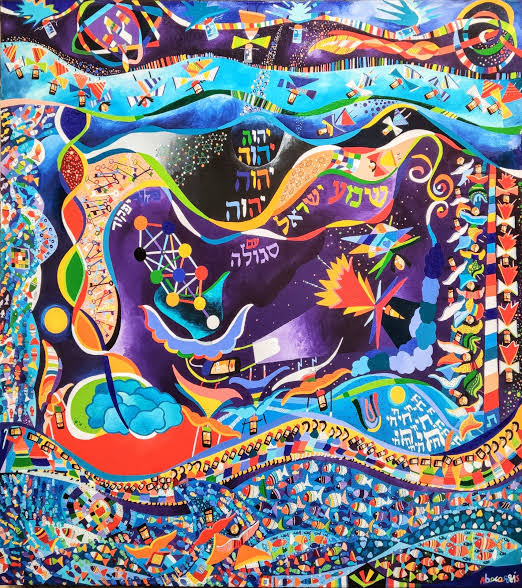
“Hear O Israel, the Lord is our God; the Lord is One… You shall love the Lord your God with all your heart, with all your soul, and with all your might.”
This is from the Shema, the fundamental statement of the Jewish faith. It is prayed daily, posted on the doorposts of Jewish homes, and for Orthodox Jews, literally bound to their arms.
To say it is simply a statement of faith, though, is to diminish its significance. Biblical storyteller Richard Swanson calls it “the most basic principle at the heart of everything.” If you’re Jewish, you pretty much know the Shema even if you know nothing else.
Hence, the question the Pharisees ask of Jesus in today’s passage is the softest of softball questions—Which commandment is the greatest? And Jesus has the textbook answer; Love God with all your heart, soul, and mind.
I love Swanson’s paraphrase:
“…love God with your ethical decisions, Love God with your life, love God in all your efforts to make sense of a crazy world.”
Let’s ponder for a second what that means for a life of faith. The Shema is the glue that binds Torah together, and Torah is the foundation of Jewish faith and practice. There is a famous quote from Rabbi Hillel, who taught a generation before Jesus. When asked to teach all of Torah while standing on one foot, he said:
“That which is despicable to you, do not do to your fellow, this is the whole Torah. The rest is commentary.”
Sometimes less is more.
Returning to Jesus’ response to the Pharisees’ question, he expands his answer beyond the Shema to include the love of neighbor. Which is fundamental to Torah, as Hillel noted, and in this context, it acts as a corollary to the Shema; not only is the love of God the most basic principle at the heart of everything, but love of neighbor is deeply interwoven with it.
So, we have love of God and love of Neighbor, and the fact that Jesus felt a need to articulate the Neighbor corollary even though the Shema could arguably be construed to include it already.
Why?
Someone can say that they love God. They can say it all day long. They can wear a cross or a Star of David and go to worship and even read the Scriptures. But if they ignore, or demean, or in any way abuse their fellow children of God—both human and non-human—then they are not living into their professed love of God. It is not possible to love God and at the same time not love your neighbor. Even the ones you don’t like very much—this is what Jesus meant when he said to love our enemies.
In a nutshell, to love our neighbor is to love what God loves—which is everything—in the way that God loves them—which is generously, compassionately, and justly. Because as philosopher Cornel West has said, justice is what love looks like in public.
So Jesus, in his response to the Pharisees, proves his Jewish orthodoxy while at the same time pushing its boundaries. Because the storyteller of Matthew wants their audience to see Jesus’s expansive vision that extends beyond the Jews to include those on the margins—the Gentiles, the tax collectors and sinners, the sick and the imprisoned. In other words, Jesus’ vision includes those who are Not Like Us, which always disturbs those who have the power to decide who is Like Us, and who is Not.
To love those whom God loves in the way that God loves them challenges us to de-center our own ego-defended selves, to listen and to be vulnerable to another. To exhibit humility—which does not come easy.
This past week the Rhode Island Interfaith Coalition, whose mission is to fight poverty by focusing on policy issues around housing, food insecurity, workforce and wage opportunities, and healthcare, held a conference at Temple Beth-El. Keynote speaker Pastor Shane Lee called us to see beyond a particular issue to the person. The person with inherent dignity, and potential to become a valued partner in the unfolding Dream of God. Because when one person cannot fulfill their potential, we all miss out. Love, Lee said, means that we do not do things for the disadvantaged, we do things with them, because to be in the image of God is to be interdependent.
So, a world in which God’s children center their neighbor instead of themselves is indeed a world turned right-side up by being turned upside-down, which is what Jesus proclaimed throughout his life, and with his life. It is the very meaning of the Dream of God for all of Creation. It is what Jesus meant when he said that he came not to abolish the Law but to fulfill it.
No wonder the authorities were nervous about this guy.
And Jesus wasn’t finished yet.
“Jesus asked them this question: ‘What do you think of the Messiah? Whose son is he?’ They said to him, ‘The son of David.’”
First, it is important to know how Judaism generally regarded the Messiah. The Messiah is a human descendant of King David, anointed to restore the Temple and to bring about a reign of peace. Of note here is that the Messiah is human and not divine, hence Jesus’ question comes from a perfectly Orthodox understanding of Messiah: How is it possible that David (who was understood at the time as being the author of the psalm that Jesus referenced) would look up to one who was a descendant, calling him Lord?
Jesus is pointing out an unexpected inversion of authority.
Certainly the Pharisees would take note of this astute observation, and find it to be disturbing, especially in light of what Jesus has already implied about the inclusivity of the Shema. At the very least, Jesus’ unassailable logic is pointing out something about David’s authority, or rather humility, with regard to the Messiah, who is supposed to be subordinate to him. This is a tremor to their established worldview, and it silences them. Again.
But the early Christian community asserted that this exchange was even more dramatic, because their interpretation of the psalm is that David is talking about the Messiah sitting at the right hand of God—and is therefore not human, but divine—the Son of God. So according to Matthew, Jesus, who many call Messiah by this time, is making a stunning claim to the Pharisees– of divinity.
So whether you read it from the Pharisees’ or the early Christians’ point of view, Jesus has presented us with a world turned right-side up by being turned upside-down, which is the very definition of the Dream of God.
So it all comes together, these two little exchanges, which are the end of a series of conversations/confrontations between Jesus and the authorities who try to take his measure and find him—concerning. If this were a job interview, would he have passed because of his cleverness? Or will he be rejected and despised because he threatens the status quo? As Richard Swanson observes, they will be watching him, carefully.
The world is watching us too. We are followers of this same Jesus, and we are called to open our hearts and make room for our neighbor, to show our love for God by decentering ourselves; seeing—and serving– the face of Jesus in everyone we meet.
So what does that look like to you? What is one thing you can do this week to help God’s Dream unfold just a little bit more?
The rest is commentary.
Prayers of the People,
The response to the bidding, “Lord, in your mercy,” is “hear our prayer.”
God of Abundance, we know that all we have comes from you and that you call us to give to you those things that are yours. Give us such an awareness of your generosity that we might reciprocate by responding in turn to the needs of those who call upon you. Lord, in your mercy, hear our prayer.
We pray for the welfare of the world; for those who are persecuted and cry for justice; for those who hunger and thirst for knowledge and freedom; for those who work for the common good. We remember those places where war, violence, injustice and natural disaster are causing great suffering, especially in those places we name. Lord, in your mercy, hear our prayer.
God of Justice, we are a nation that cries out to you for healing and peace. In this election season we pray that you will bring us out of division and into awareness of our interdependence. Bless us with leaders of integrity who care deeply for the needs of all people, and public servants who find joy in reconciliation and justice. Lord in your mercy, hear our prayer.
Creating God, we pray for the world you have made, that we might be good stewards of your bounty, living in harmony with Mother Earth and reciprocating her generosity by protecting, preserving, and restoring what She has freely given us. Lord, in your mercy, hear our prayer.
Healing God, bring your healing power to all who suffer in body, mind, or spirit, remembering especially, Sam, Michael, Linda, Tom, Brooke, David, Barbara and those we name. Lord, in your mercy, hear our prayer.
Let your wisdom and grace rest upon those who celebrate birthdays this week, especially Kay Lisle, Glenn McCauley, Diane Merdian, John Bracken, Dorianne Defeo, Paige Macnie, Gail Hamel, and Faith Fogle.
Lord, in your mercy, hear our prayer.
We pray for those we love but see no longer, especially Bridgette Hubbard, wife of Richard and dedicated Thrifty Goose volunteer, who died on Friday, and those we name. And we pray for all who grieve.
Lord, in your mercy, hear our prayer.
